
Asking Better Questions
What I learned at the International Conference on Adoption Research in Portugal

For most of modern adoption history, adoptees have been studied.
This week, standing at a podium in Porto, Portugal, presenting my own research alongside some of the world’s leading adoption scholars, I noticed a shift: adoptees are no longer only the subject of the field. We are beginning to become the ones who shape it.
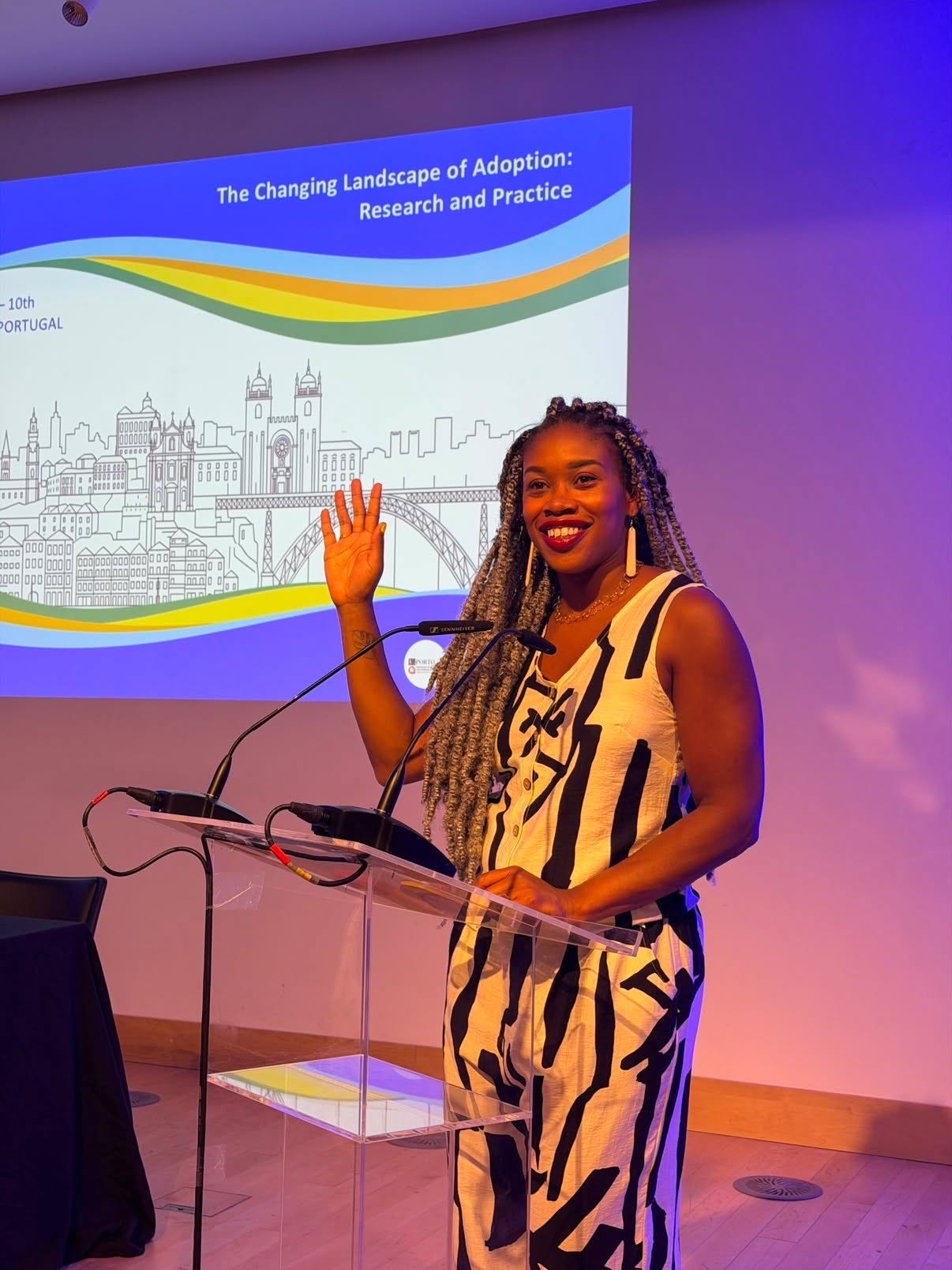
My husband Bryan and I had spent the week before wandering the cobblestone streets of Lisbon, sightseeing over the terracotta rooftops spilling down steep hillsides, appreciating the centuries-old buildings stitched together by narrow alleyways and marveling at the impossibly beautiful overlooks in the Algarve. We rode the crowded, scenic coastal train from Lisbon to the glamorous seaside town of Cascais. Then Bryan flew home, and my vacation quietly gave way to something else entirely. I stayed behind for the 9th International Conference on Adoption Research (ICAR9).
Rooms Full of Experts
This conference carries a quiet prestige. Since Dr. Hal Grotevant (now retired) convened the first ICAR in Minneapolis in 1999, it has traveled across England, the Netherlands, Spain, New Zealand, Canada, and Italy, back to Minneapolis for its 25th anniversary, and now to Portugal. And yet in twenty-five years of gathering the field’s brightest minds, not once has an adoptee sat on the ICAR committees.
I know full well that lived experience is not the opposite of expertise. It is not a substitute for rigorous research, and not a decoration for it either, but a source of knowledge in its own right, with its own discipline and its own claim to authority.
As someone whose highest degree is a bachelor’s in psychology, I occasionally felt a little out of place among so many PhDs, professors, and career researchers. But I never felt intimidated. Because while I am not an academic researcher, my life’s work in film, consulting and building programs has always been grounded in a different kind of question: How do we make life better for adoptees today?
Through the Adoptee Mentoring Society, we set out to answer a deceptively simple version of that question: What happens when adoptees stop waiting for institutions to build the support we need and start building it ourselves? At ICAR9, we presented the results.
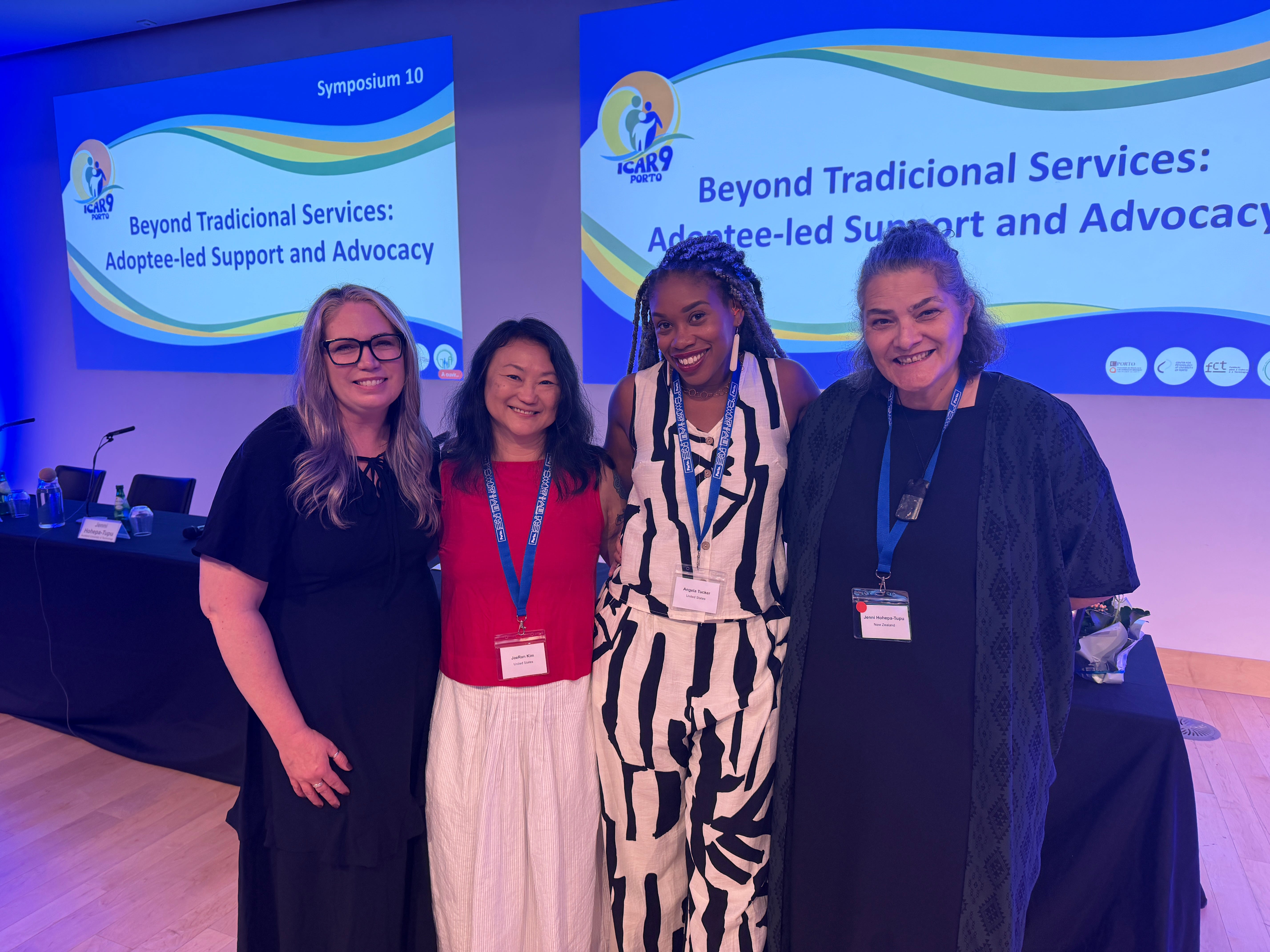
That question is what brought me to Porto not just as an attendee, but as a co-chair. I helped bring together a symposium of adoptee scholars and practitioners from four countries; Dr. JaeRan Kim and Dr. Bonni Goodwin from the United States, Dr. Jenni Hohepa-Tupu from New Zealand, Shila De Vries from the Netherlands, and Annalisa Toccara from the United Kingdom, to explore what happens when adoptees build support systems for one another.
Again and again, scholars presented evidence that challenged how adoption has traditionally been understood. Bastiaan Seo Vin Flikweert (신서빈), the biological son of two adoptees, put it strongly and succinctly: “Adoption is an intergenerational complexity.”
Some of the presentations tried to tackle a harder question underneath that one: Is adoption working? What does the evidence actually tell us?
What the Evidence Says
Jesús Palacios opened that inquiry, exploring what early adversity leaves behind, and what healing can, and cannot, rewrite. His work suggested that while some developmental outcomes respond remarkably well to nurturing post-adoption experiences, others remain more resistant to change. One finding especially stayed with me: the reflective functioning of adoptive parents. His research found that their ability to thoughtfully understand a child’s inner emotional world may be one of the greatest protective factors a adoptee can have.
Ellen Pinderhughes picked up a related thread. Her work suggested that adoptive families who openly acknowledge racial, cultural, and adoptive differences are also more likely to engage in meaningful conversations about them — another version of the same lesson: looking directly at what’s true, rather than tiptoeing around it, is what helps adoptees thrive.
Dr. Jae-In Kim and Dr. Rebecca Randall’s research on adoptive family estrangement pushed the point further, reminding us that two people can inhabit the same family and carry profoundly different memories of it — both of which deserve to be understood. And Marisa Huang, a PhD Student at Boston College, shared something that stopped me cold: many Korean and Chinese adoptees now use missing persons databases in hopes of finding their biological families.
Think about that for a moment. Technology designed to reunite families after tragedy is now helping adoptees search for pieces of themselves.
Throughout the conference, I found myself gravitating toward presentations that centered adoptee voices and relationships. I don’t believe lived experience should replace scholarship, but I’ve become convinced the strongest scholarship emerges when lived experience helps shape the questions being asked.
An Old Imbalance
Throughout the week, I found myself thinking not only about what researchers were studying, but about who gets to interpret whose lives. This conversation that continued long after the presentations ended. Standing with adoptee researcher Dr. Ashley Toland overlooking the Douro River one evening, I listened as she said:
“I found myself drifting during some presentations, imagining myself presenting data on the lived experiences of adoptive parents, presenting myself as the expert on their lives, my data gathered primarily from adoptees. Can you even imagine the uproar?”
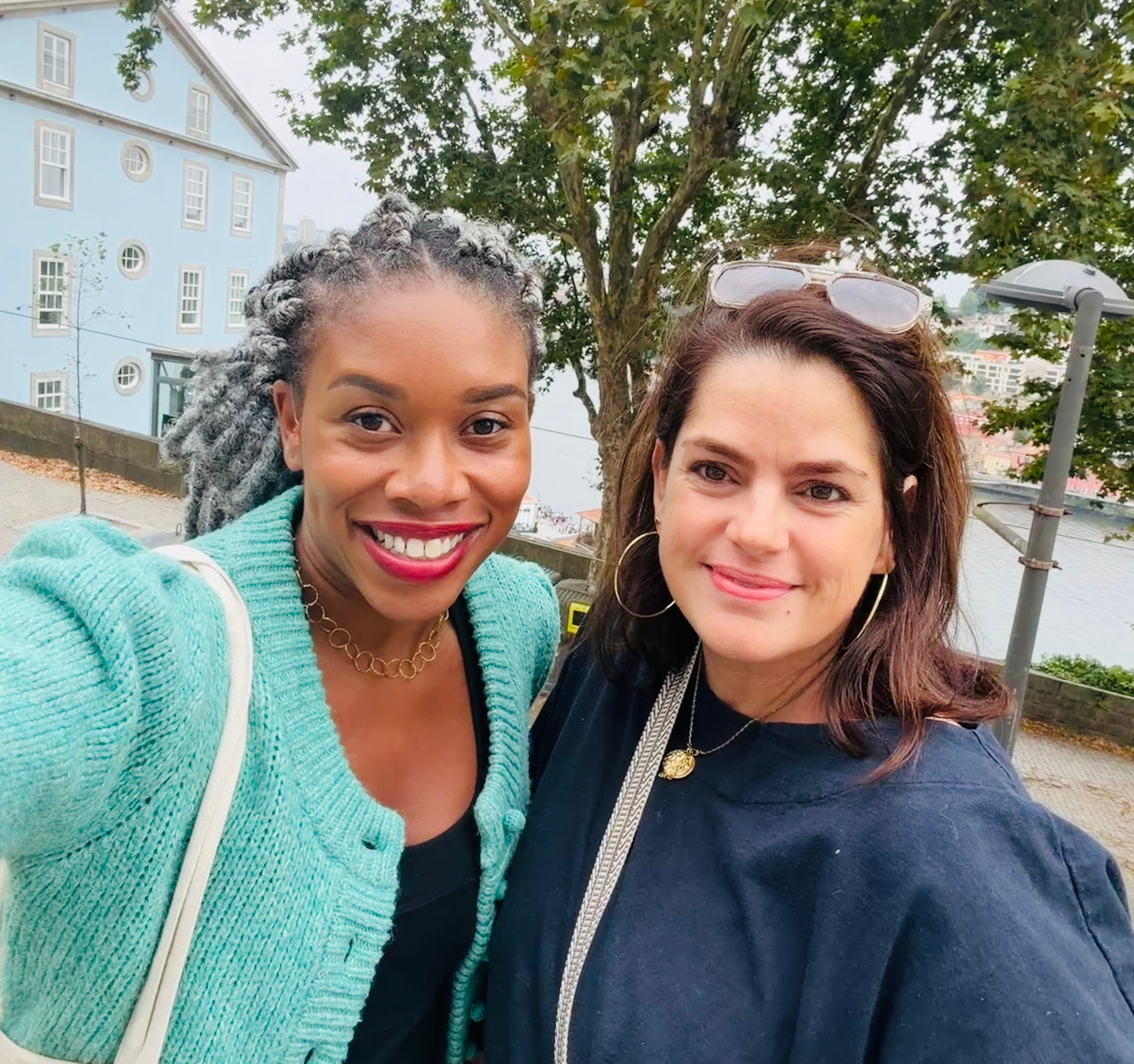
Ashley’s thought experiment reveals the asymmetry: Most of us would bristle at adoptees claiming authority over adoptive parents’ experiences based primarily on interviews with other adoptees. Yet adoptees have long grown accustomed to reading interpretations of our lives written largely without us.
Room to Move
Although researchers represented more than twenty countries, Dr. Gina Miranda Samuel’s and I reflected on the fact that we could count fewer than ten Black adoption researchers in attendance. This is striking, given how significant a portion of the global adoptee community is Black, particularly among those adopted through foster care in countries like the United States.
Where are the next generation of Black adoption researchers? What would it mean for ICAR to be hosted in Sub-Saharan Africa for the first time?
One evening, over dinner with a small cadre of folks, including Sahita Pierre-Antoine, a Haitian therapist whose clinical work treats rhythm and movement as a language for healing. She asked a question I haven’t stopped thinking about: What if the conference honored not only the intellect, but the body?
She knows that movement sharpens attention, increases energy, and helps us learn, and she's watched her clients access what talk therapy alone couldn't reach. Our conversation imagined what ICAR could look like if it were infused with this knowledge: rooms without auditoriums of fixed seats facing a podium, where wobble stools and exercise balls sit alongside standard chairs, and wide aisles and open space at the room's edges welcome anyone who needs to stand, sway, or move during a keynote rather than sit still through it. A room built for bodies as much as minds.
For most of modern adoption history, adoptees have been studied. I left Porto believing that history is starting to bend — not because every question was answered, but because the people asking them are starting to change.
Check out my Instagram (@angieadoptee) or Facebook (The Adopted Life) to see more fun photos from the conference.
Thank you for sharing, Angela. As an adoptee and adoption researcher, I'm always encouraged to see thoughtful research in this field. At the same time, I'm reminded that statistics can describe us, but they cannot represent us. Numbers reveal patterns, but lived experience provides the meaning behind them. I hope we continue to create spaces where adoptees contribute not only as research participants, but also as researchers, presenters, and partners in shaping our collective understanding.
Angela love your voice! Your intention and perspective ! So glad you are there representing in Portugal at the conference ❤️